ONLINE
ORDER
 이메일 문의하기
 카카오톡 문의하기

Protein-protein interactions play important roles in both inter- and intra-cellular signaling [1]. Among the various methods of detecting protein-protein interactions, co-IP is cost-saving, easy to handle, and can be applied to various types of sample, such as plant cells [4], mammalian cells [5] yeast [2], and nematode tissue [3].
The figure below shows the workflow of co-IP.
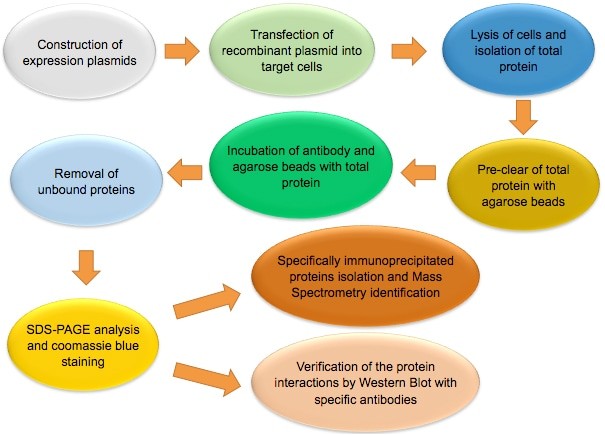
Note: Co-IP is a multi-step assay. Experiment should be performed under non-denaturing conditions. Not only high quality reagents, but also careful planning and rigorous operation are needed to obtain good result. Each step of the experiment, from sample preparation, antibody-beads incubation, to co-IP elution, should be tightly controlled to ensure success of the experiment.
Please refer to the relating protocols on our website for the following expression plasmid transformation, colony screening and positive colony verification steps.
Cell type used for transfection is determined according to the requirement of the experiment.
Note: In order to maintain the physiological state of the proteins, manipulation of the cell lysis should be under low temperature, the cell lysis buffer should contain mild non-ionic detergent, proteinase inhibitor, and glycerol.
Choice of detergent is essential for the success of the co-IP assay. Different types and concentration of detergents can affect co-IP result in the following aspects:
- Permeability of cytoplasm/organelle membrane: Many proteins are located in organelles and should be released prior to interacting with antibodies.
- Release of membrane proteins: the structural stability of many membrane proteins varies with the type and concentration of detergents. For co-IP of membrane proteins, the selection of detergent should be cautious.
- Protein-protein interaction: different detergents have different influences on various protein-protein interactions, so appropriate detergent should be determined according to the protein property.
Alternatively, the antibody can be added for a few hours prior to the addition of Protein A/G agarose beads.
Note: In general, 1 μg antibody is used for 1 mg total protein. The usage of antibody should be no more than 5 μg, since too much antibody addition may generate false positive result.
Proper control is important. In general, incubation with an irrelevant protein antibody is usually used as negative control. Besides, incubation of antibody with bait protein free total protein solution can also serve as negative control, especially when polyclonal antibody is used.
Tagged target proteins can also be applied to co-IP assay, and corresponding anti-tag antibodies are needed.